
Pocket Gophers in Southern California: How to Protect Your Property
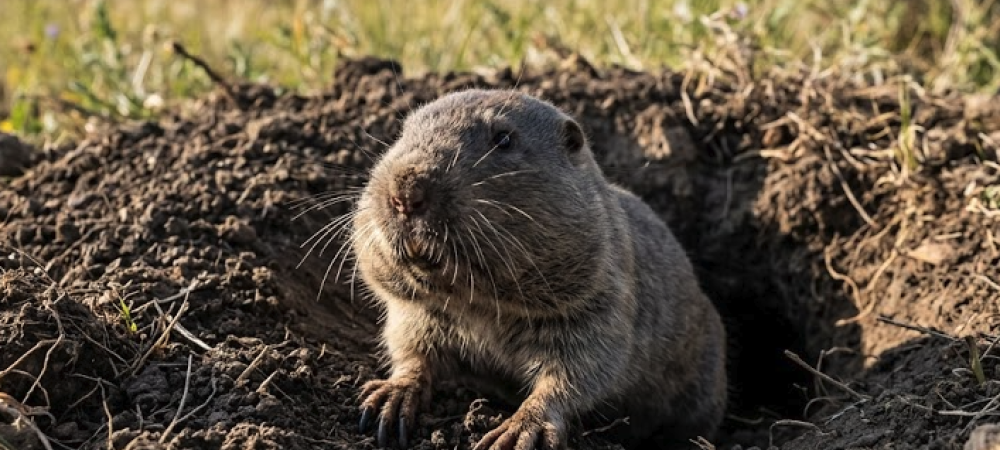
You step outside to find fresh mounds of dirt scattered across your yard. The plants near them look fine. By the next morning, one has wilted. A week later, your irrigation stops working in that corner of the property. You've been dealing with a pocket gopher. In Southern California, pocket gophers don't hibernate. They tunnel, feed, breed, and expand their territory every month of the year. A small problem in January is a larger problem by March, and a significant one by summer.
This guide covers what pocket gophers actually are, how to recognize their activity, what the damage can involve, and what professional removal looks like.
What Is a Pocket Gopher?
Pocket gophers are burrowing rodents, not related to ground squirrels despite sometimes being confused with them. The species most commonly found in Southern California is Thomomys bottae, known as Botta's pocket gopher. Western pocket gophers are also present in parts of the region.
They're brownish-grey, roughly 6 to 10 inches long, and rarely seen above ground. They spend approximately 90% of their lives underground. The "pocket" in their name refers to their external cheek pouches, which they use to carry food back to underground storage chambers. They're solitary and territorial; a single gopher will aggressively defend its tunnel system and is typically the sole occupant.
That last point is important: in most residential situations, you're dealing with one animal. One gopher can nonetheless create an enormous amount of damage before you notice it's there.
How to Recognize Gopher Activity
The most visible sign is the mound, a fan-shaped or crescent-shaped pile of loose soil, usually with a plugged entrance hole off to one side. This distinguishes a gopher mound from a mole mound, which tends to be rounder and volcano-shaped, and from ground squirrel burrow entrances, which are open holes without the pushed-up soil characteristic.
Other signs that often appear before homeowners connect them to gophers:
- Plants dying suddenly with no visible above-ground cause. Gophers eat roots, so a plant can be destroyed from below while looking outwardly healthy — until it tips over or wilts without warning.
- Irrigation lines that stop working in a section of the yard. Gophers gnaw through drip lines and PVC pipe as part of their tunneling behavior.
- Soft spots or slightly sunken areas in the yard. These indicate tunnels beneath the surface.
- Multiple new mounds appearing over a short period. A single active gopher can produce one to three mounds per day under good conditions.
If you're seeing mounds but plants are still alive and you notice ridging or raised surface runs, that's more consistent with moles. The two require different treatment approaches entirely. Moles eat grubs and earthworms, not roots, and their tunnel systems are built differently.
Why Southern California Properties Are Particularly Vulnerable
Southern California's mild climate, irrigated landscapes, and loose amended soil creates an ideal environment for gophers year-round. Irrigation keeps soil moist and workable. Drip-fed gardens and planter beds provide constant access to roots. And without a hard winter freeze, there's no population-limiting event the way there is in most of the country.
The Inland Empire (San Bernardino and Riverside counties) and the San Gabriel Valley are among the most consistently affected areas in the region, largely due to soil composition and the density of residential irrigation. But gophers are active across Los Angeles, Orange, and surrounding counties wherever there's irrigated landscaping.
Gophers are especially attracted to:
- Vegetable gardens and raised beds
- Young citrus and avocado trees, whose roots are accessible and nutritious
- Bird of paradise and agapanthus, which are common in SoCal residential landscaping
- Drip-irrigated ornamental beds, where soil stays soft and roots are concentrated
Properties that border open space, hillsides, or undeveloped land tend to experience more reinfestation pressure, since gophers from adjacent areas can move in after a resident animal is removed.
The Full Scope of the Damage
Gopher damage is easy to underestimate early on, because much of it is invisible until something fails. By the time most homeowners call for help, the tunnel system is already extensive.
What's at risk:
Vegetation and root systems. Gophers eat plant roots, bulbs, and tubers, pulling plants downward from below. Trees, shrubs, and perennials that took years to establish can be killed in a matter of weeks once a gopher settles under them.
Irrigation infrastructure. Gnawed drip lines and PVC pipes are among the most common and costly forms of gopher damage on residential properties. A single chewed line can cause a section of irrigation to fail silently, either starving plants of water or flooding an area depending on the system.
Underground utility lines. In some cases, gophers damage cable, low-voltage lighting wire, and other buried infrastructure.
Soil stability and grades. Extensive tunnel systems weaken soil, create subsidence, and can affect drainage and grading — particularly on sloped properties.
Secondary pest pressure. Gophers can introduce fleas, mites, and ticks to a property, adding a secondary pest management concern on top of the primary one.
The single most important thing to understand about timing: the damage compounds. A gopher that's been on your property for one week is a much smaller problem than one that's been there for two months. Acting on the first mound is always less expensive than waiting.
What Doesn't Work — and Why Homeowners Keep Trying It
There's no shortage of gopher deterrent products on the market, and most homeowners try several before calling a professional. Vibration stakes, ultrasonic devices, castor oil granules, and various repellent plants are among the most common — and while they occasionally cause a gopher to shift its tunnel temporarily, none of them reliably remove an established animal or prevent reinfestation.
The problem is behavioral. Gophers are underground almost their entire lives. They respond to disturbance by going deeper or routing around it. A vibration stake might shift mound activity 10 feet to the left. The gopher is still on your property, still tunneling, and the roots and irrigation lines are still at risk.
Hardware cloth barriers installed beneath raised planter beds are somewhat effective. They protect specific plantings but they don't remove the gopher, and they don't address the rest of the property.
Homeowner-applied bait products are available at hardware stores, but several important factors limit their effectiveness. The bait must be placed in the main tunnel, not a lateral branch. Lateral tunnel placement often fails because the gopher detects the disturbance and abandons that section. Consumer-grade bait formulations are also generally less potent than professional products, often requiring multiple exposures to be effective.
It's also worth noting that California has enacted a series of laws — AB2552, AB1322, and AB1788 — that significantly restrict commercial-grade rodenticide baits and their use around wildlife. These regulations affect what methods are legally available and appropriate in different settings. Because of these limitations, professional gopher control is often the safest and most effective solution.
What Professional Gopher Removal Involves
Professional removal isn't simply a more powerful version of what homeowners try on their own. The approach is fundamentally different. Here's how:
- Inspection and tunnel mapping. A technician probes the soil to locate the main runway — the primary tunnel the gopher uses regularly. This is the critical first step, because traps or treatment placed only in lateral branches consistently underperform. The main tunnel runs deeper and is where the gopher travels throughout the day.
- Trapping. Underground trapping placed directly in active main tunnels is the most reliable removal method for residential properties. It's targeted, requires no chemicals, and poses no risk to pets, children, or non-target wildlife. A technician sets traps and returns within 24–48 hours to check and reset as needed.
- CO2 fumigation. Pressurized carbon monoxide or CO2 injection into the burrow system is another effective method used on residential and commercial properties. It's chemical-free and is particularly useful for larger or more complex tunnel systems.
- Exclusion. After removal, exclusion work — installing hardware cloth beneath new plantings, protecting specific beds, or reinforcing vulnerable areas — reduces the risk of reinfestation. This is especially relevant for properties that border open space or have experienced repeated gopher problems.
- Ongoing monitoring. Because neighboring properties can introduce new gophers, and because Southern California's year-round activity means there's no off-season, many homeowners benefit from a recurring service arrangement.
Seeing fresh mounds on your property? The sooner gopher activity is addressed, the less damage it causes. Pest Innovations Inc provides professional gopher removal services in the area. Contact us to get a free estimate on professional help.